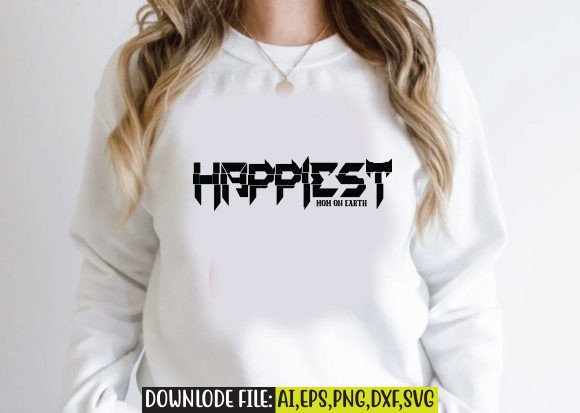
A Designer's Take on the Happiest Mom on Earth Embroidery Design
As someone who stitches for clients and my own small shop, I approach every new embroidery design with a practical eye. I'm not just looking at how cute it is on the screen; I'm thinking about how it will look on fabric, how it will stitch out, and ultimately, how it will make someone feel when they receive it. The Happiest Mom on Earth T Shirt Design is one that landed on my worktable recently, and I wanted to share my thoughts from a maker's perspective.
The First Impression: Pure, Joyful Simplicity
When I first opened this design, the immediate feeling was one of warm, straightforward joy. It's not overly ornate or detailed, which, in embroidery, is often a strength. The layout is clean, with a central, celebratory statement. The visual personality is friendly and iconic—it feels like something you'd genuinely want to wear or display. This isn't a design that tries to do too much; it knows its role. It belongs naturally to projects meant to convey love, appreciation, and celebration. My mind immediately went to gifts: a keepsake pillow for a new grandmother, a custom tote for a mom's group leader, or a simple, heartfelt sweatshirt.
Where This Design Excels in Real Projects
In practice, a design like this becomes incredibly versatile. Its clarity makes it a strong candidate for a wide range of embroidery projects. I’ve mentally mapped it out across several real-life scenarios I encounter weekly.
For custom apparel, like t-shirts or relaxed-fit sweatshirts, it would stitch out cleanly and become a wearable badge of honor. On a sturdy canvas tote bag, it would hold up to daily use as a functional, cheerful accessory. For baby items, such as a soft blanket or a little bib, it could be scaled down to create a sweet, personalized gift celebrating the mom. As an embroidered patch, it could be applied to a cap or apron, adding a touch of personality.
Beyond stitched goods, the clean lines suggest it would work beautifully for other craft business applications. It could be used to create printable mockups for digital product listings, or as a design asset for creating signs and cards, as mentioned in its description. For an Etsy seller offering a range of mom-themed products, this embroidery file could provide consistency across different items, from kitchen towels to framed nursery decor.
The Scenario: A Boutique Holiday Gift Basket
Let’s walk through a specific case. Imagine a client orders a holiday gift basket for a cherished friend who just became a grandmother. The basket includes a custom embroidered tea towel and a cozy pillow cover. Using the Happiest Mom on Earth design across both items creates a cohesive, premium feel. On the towel, a smaller version near the hem acts as a decorative accent. On the pillow cover, a larger, centered version becomes the focal point. This isn't just about stitching; it's about crafting an experience. The design’s inherent warmth elevates the perceived value of the entire gift basket, fostering customer trust in your handmade presentation.
Considerations for Stitching Success
While the design is wonderfully straightforward, successful embroidery always requires a bit of planning. Here are the practical notes I would make before loading this embroidery file into my machine.
The lettering is the heart of the design. To maintain stitching clarity, especially on smaller items, careful attention to hoop size and stitch density is key. On thin or stretchy fabrics like a standard t-shirt, a good stabilizer is non-negotiable to prevent puckering and keep those letters sharp. For textured fabrics like a sweater, you might need to adjust your expectations slightly—the stitches may sit differently, but the message will still shine.
Working on dark fabric demands thoughtful thread color contrast. A bright, cheerful palette would pop beautifully against navy or black. On curved surfaces like a cap, the layout is simple enough that it should adapt well, but always test a placement to ensure it fits the available space comfortably. The lack of tiny, intricate details is a bonus here—it means fewer worries about dense stitch areas or corners that might not stitch out cleanly.
Always, always test the design on scrap fabric first. Run it in the intended size and on a similar fabric background. Check how the satin or fill stitches look. Does it feel balanced? This quick step saves so much frustration on a final product.
How This Design Affects Your Craft Business
From a business angle, a design like this hits a sweet spot. Its universal theme makes products highly giftable. A customer browsing your small shop or Etsy listings is likely looking for something that speaks directly to emotion—this design does that without ambiguity. It aids in buyer engagement because it’s easy to understand and imagine wearing or giving.
For brand consistency, if your shop focuses on family, celebration, or heartfelt gifts, this graphics asset can become a reliable part of your repertoire. It lends a sense of professionalism when executed well on a finished product. The finished embroidered item feels intentional and crafted, not generic.
A Final, Crucial Step Before You Stitch
My most important advice, beyond the technical, is about the foundation. The product description mentions it can be applied to various items. However, before using any design for commercial embroidery or selling finished products, you must confirm its licensing terms. Does it allow for commercial use? Are there any restrictions? This is vital for protecting your craft business and operating with confidence. Never assume; always check.
The Happiest Mom on Earth T Shirt Design, from my viewpoint, is a solid, joyful asset for makers. It’s a design that understands its purpose: to celebrate. With practical preparation—testing, choosing the right fabrics, and ensuring proper licensing—it can translate from a digital file into a truly meaningful handmade product that resonates with both the maker and the recipient.